Posts Tagged ‘ DIY

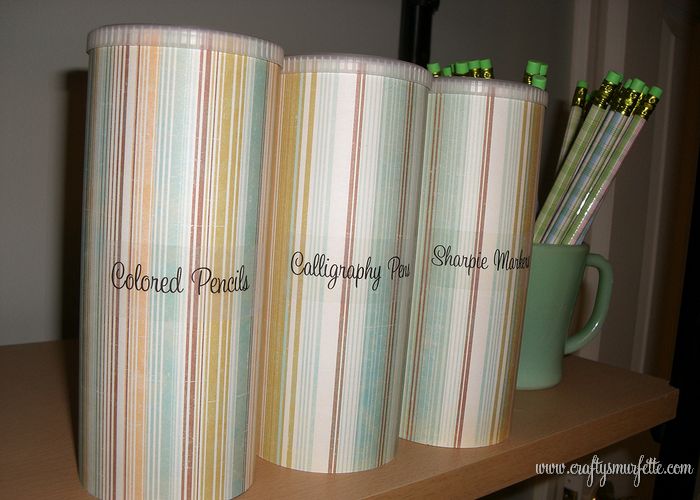
ReUse – Powdered Drink Container Candle

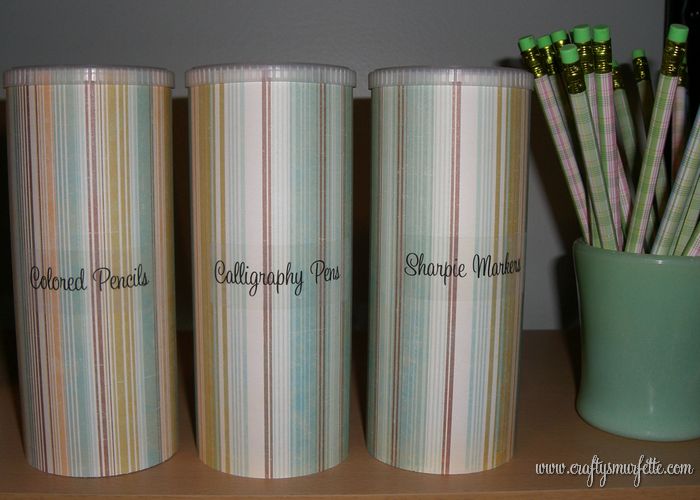
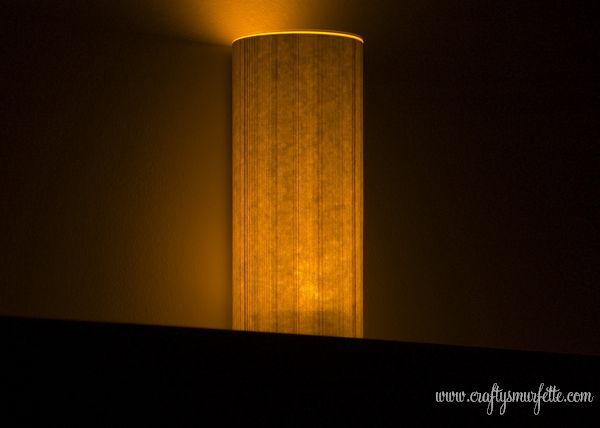
I have a friend with a growing 5-year-old…one who decided she wanted some big girl candles for her room.  Obviously candles aren’t the best solution for a 5 year old, and battery operated candles are quite pricey for something that might lose its appeal quite quickly.  So I had an idea:  use some leftover battery operated tea lights to whip her up some cheaper “big girl” candles :)

Materials:

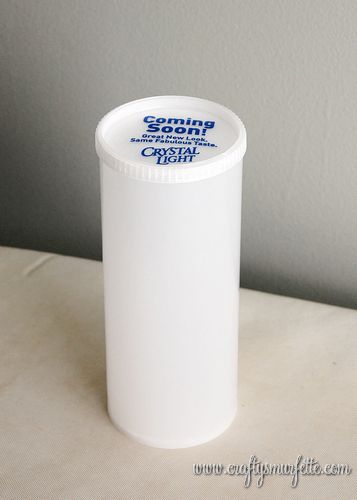
  • Plastic Powdered Drink tubes (ex. Crystal Light)
  • Battery Operated Tea Light (1 per plastic tube)
  • Scrapbook Paper
  • Double-Sided tape or Xyron Machine
  • Scissors or Paper Cutter

Directions:

  1. Start out by cleaning the plastic container and removing all labels.  Dry throughly afterwards.
  2. Measure the height of your plastic container.
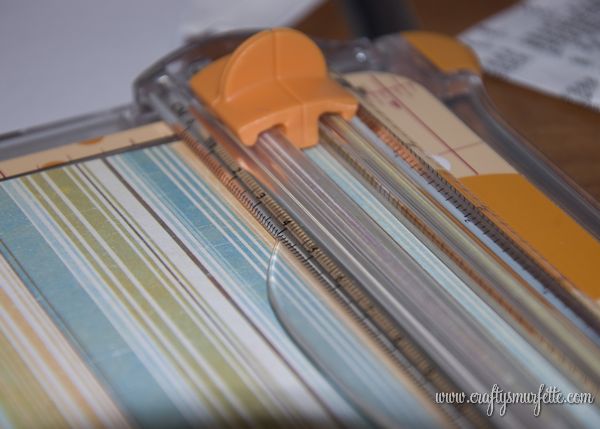
  3. Using your scissors or paper-cutter cut a piece of scrapbook paper to the correct height.
  4. Wrap paper around your container and make a small mark where the edges meet (adding .25 inch to allow for a better seal/overlap).
  5. Using your scissors or paper-cutter cut the piece of scrapbook paper to the correct width.  Use this piece as a template to cut other pieces for more containers.
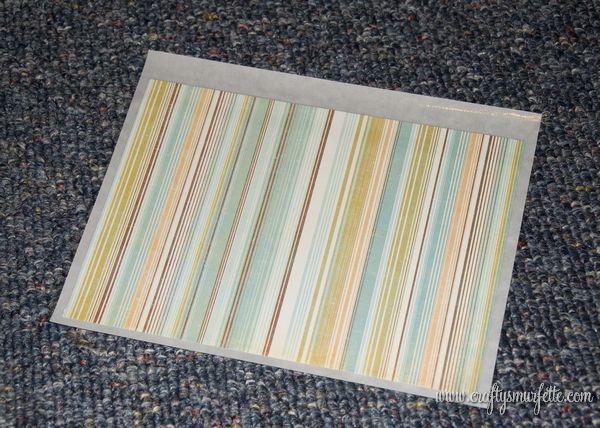
  6. If using an Xyron machine run your pieces of cut scrapbook paper through the machine.
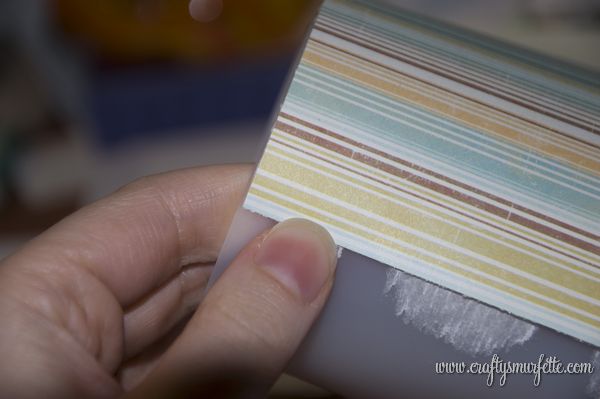
  7. Carefully remove the backing from the paper and carefully wrap it around the plastic container, taking care to smooth out to prevent any air bubbles. (If using double-sided tape run a piece down the height of the container and attach one end of the paper.  Then attach another piece of double-sided tape to the inside of the finishing edge and carefully smooth around so that the paper is smooth and the edges are sealed).
  8. Drop in 1 or 2 battery operated votives and display your “big girl candles”. :)

Cost Breakdown:

  • Plastic Powdered Beverage Containers – Free from recycle bin
  • Scrapbook Paper – Free (or $1 from Target Dollar section)
  • Battery Operated Tea Lights – Free, leftover from wedding (or $1 for 2 at Dollar Tree)

Total:  FREE (or $1.50)

Bonus:  These are so easy to make they would make a fun crafty project for the kiddos as well!

DIY: Holiday Napkin Wraps – Part II

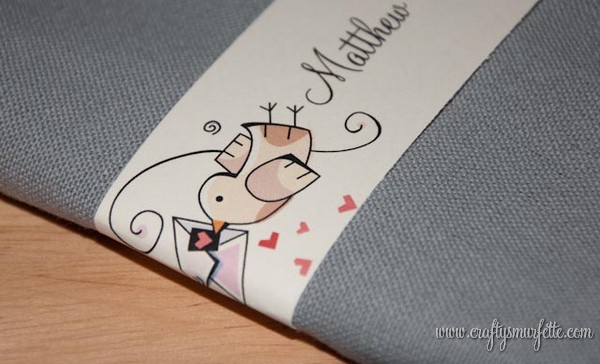
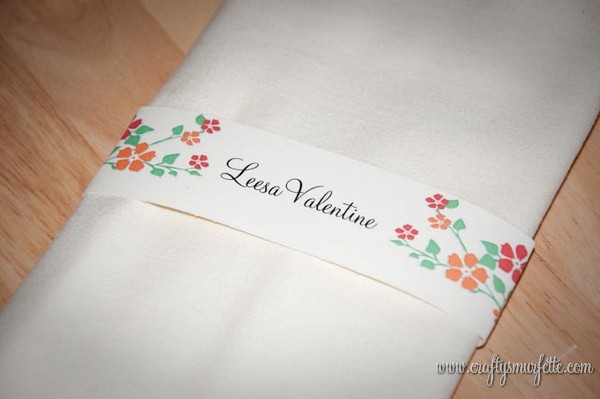
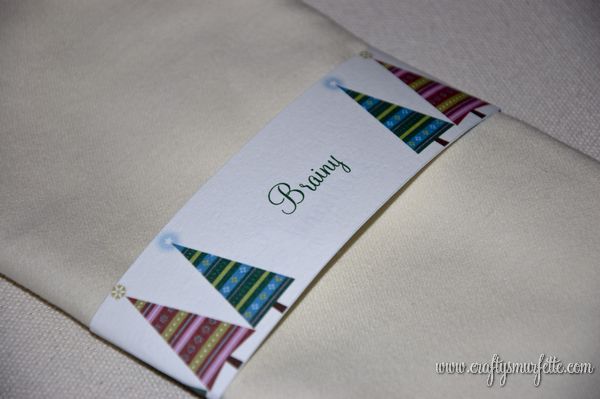
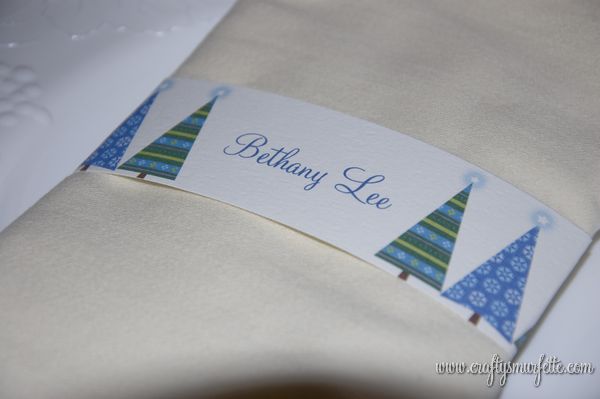
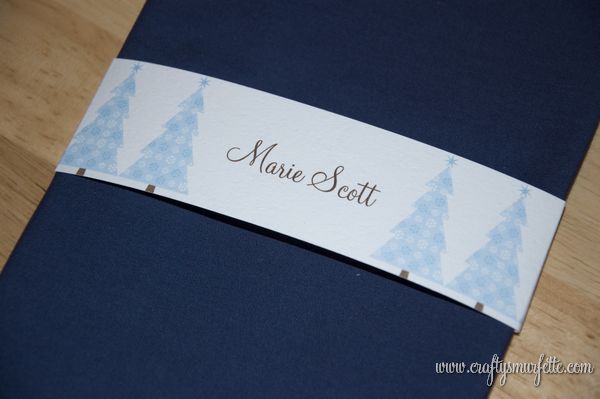
And now time for the “tree edition” of the napkin wraps.  Again, these work the same as my previous wraps, refer to this post for complete instructions.  Merry Christmas from our Smurfy house to yours!

The first is a Set of Multi-Colored Trees
Click to download: csmurf_treenapkins

Or how about my favorite with green & blue trees
click to download template:  csmurf_greenbluetreenapkins

and finally a winter wonderland with pale blue trees
click to download template:  csmurf_palebluetreesnapkins

Check back tomorrow for my final Christmas project for this year:  My version of these :)

DIY: Holiday Napkins Wraps – Part I

Ever had that moment when you know you’ve already created something and just can’t find it.  That was me with the Holiday Napkin wraps…I created and tested them weeks ago and then promptly lost the files.  Thankfully today I found them, and not a moment too soon! These work the same as my previous wraps, refer to this post for complete instructions.  Merry Christmas!!

The first is a sepia toned winter cottage.
Click to download: csmurf_rustichousenapkins

Or how about some pastel ornaments
click to download template:  csmurf_pastelornamentnapkins

Check back tomorrow for the “tree” edition of Holiday Napkin wraps & hope you and yours have a wonderful Christmas!

Die-Cut Christmas: Food Buffet Labels

I’ve dubbed this Christmas season in our home as the “Die-Cut Christmas” because I plan to make several projects using both my Cuttlebug for die-cuts and paper punches.  First there was the Christmas Card Addresses, then the place cards and I liked how they turned out so I moved onto today’s project:  Buffet Labels.

Editor’s Note: These will actually get quite a bit of use during the holidays with not one but Christmas potluck lunches, and I’m so excited to see them in all their glory!

Materials Needed:

  • White or Ivory Text Weight Paper
  • Small pieces of Heavy weight card stock or even recycled cardboard
  • Green Cardstock or Construction paper (it’s ok to reuse envelopes, etc.)
  • Red Paper (it’s ok to reuse envelopes, etc.)
  • Glue Stick or pen

Tools  Needed:

  • Top Note Die from Stampin Up
  • Die Cutting Machine (I use a Cuttlebug)
  • Sizzix Festive Christmas Set (purchased 50% off at Joann’s)
  • Standard Hole Punch
  • Scissors or Paper Cutter
  • Computer with Word Processing Software of your choice
  • Home Printer

Getting the pieces punched out:

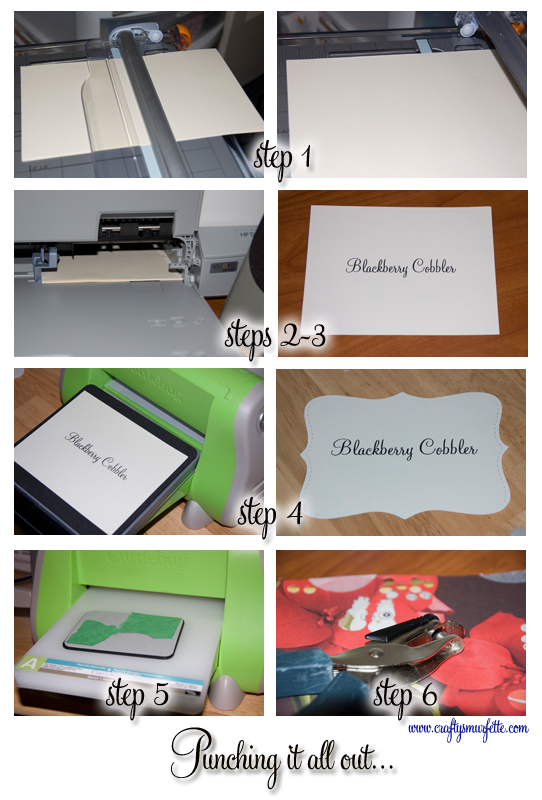
  1. Cut your paper.  I cut my paper ahead of time so it is easier to center it on the die cut.  Since I am using regular 8.5 x 11 paper, I simply cut my paper into fourths.  For this project I used my paper-cutter because it has the outlines for this size paper on the board so I just line it up and cut.  Each piece of paper should end up 4.25 x 5.5 inches.
  2. Setup your document in your word processing software.  I use MS Word, so I just create a new document and then set the page size to be the 4.25 x 5.5 inches of my pre-cut paper.  Then I center the document and choose my font/size of choice.  For this project I used Monterey BT which you can download for free (see my templates page for a link). This is where you could get really fancy and use the mail merge feature of MS Word to fill in from a spreadsheet, it’s a great time saver but is a bit tricky to setup…or you could just cut and paste in each one like I did.
  3. Print out your individual buffet labels.
  4. Start die cutting.  Using the Top Note Die face up in your machine, carefully center the printed page in the center of the surface.  Run through the machine.  Repeat for each printed page.
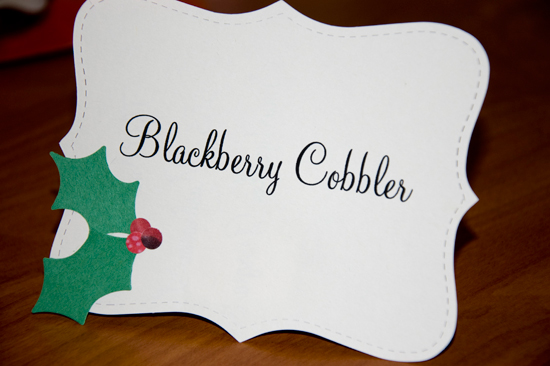
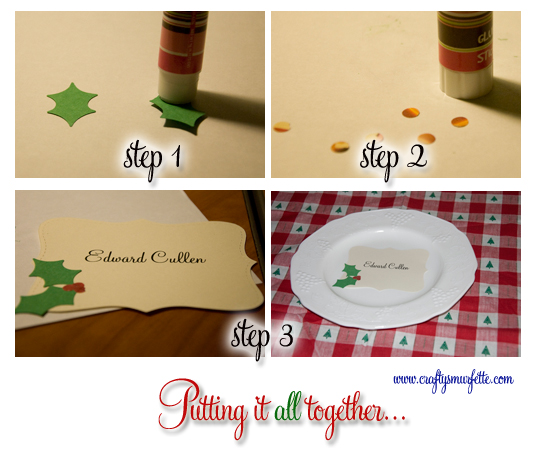
  5. Continue die cutting.  Now take out your green paper and the holly die and start working on cutting out your leaves.  A large holly shaped paper punch would also work well for this if you have one!  You’ll need 2 holly leaves per buffet label.  Note that I didn’t use whole pieces of paper when I cut out my leaves…I had some scrap paper from the edges of some green top notes I cut out earlier so I just used the scrap paper to line up over my leaves.  This is a great usage for scraps or even perhaps those envelopes from the Christmas cards you’ve already received!
  6. Punch out your berries.  Now the Holly Die comes with a berry if you’d like a single red berry…but I liked the smaller berries so I went with a standard hole punch.  You’ll need 3 to 4 berries per buffet label.  Again this is a great place to reuse paper…you can see I used the cover of an old PaperSource catalog that was in my recycle bin.

Putting it all together:

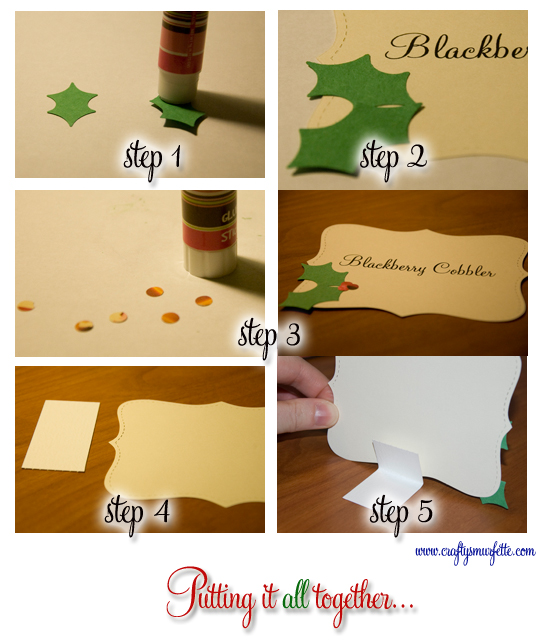
  1. Start with the Leaves.  Using a piece of plastic or paper, take the glue stick and cover the back of 2 of the holly leaves so the portions of the leaves that will attach to the buffet label are covered.
  2. Carefully lift them from the backing and place onto label (I found it easier to start with the lower leaf in the bottom left corner and then add the upper one afterwards).  To remove the leaf from the backing I was able to use my fingernail, however tweezers would also work well for this.
  3. Add the berries.  Using a glue stick repeat the step above for the berries, this is the most tedious step.  I think a glue pen or even school glue might have worked more quickly for this step.
  4. Cut a small piece of heavy cardstock or recycled cardboard (think cereal boxes) approx 1 inch by 3.5 inches per buffet label.
  5. Fold the first third of the cardboard strip forwards and align on the back of the label, holding in place with a glue stick or even tape.
  6. Stand it in front of your tasty dishes and let them tell the world that your cobbler is made of blackberries ;)

If you like these, you might also like the other entries in my Die-Cut Christmas Series:
- Die-Cut Christmas Card Addresses
- Die-Cut Seating Cards
- Die-Cut Food Buffet Labels

Die-Cut Christmas – Seating Cards

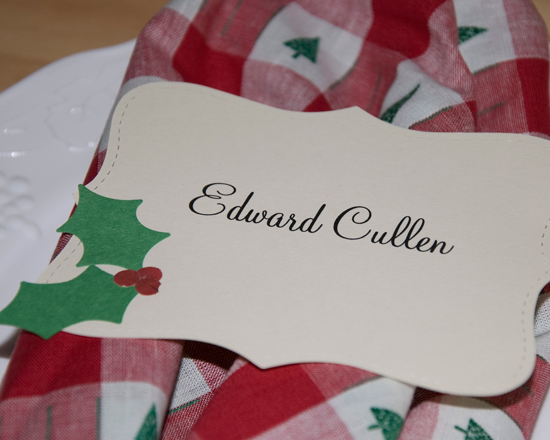
I’ve dubbed this Christmas season in our home as the “Die-Cut Christmas” because I plan to make several projects using both my Cuttlebug for die-cuts and paper punches.  First there was the Christmas Card Addresses, and I liked how they turned out so I moved onto today’s project:  Seating Cards

Editor’s Note:  Here is where I should be totally honest and fess up that my family will in no shape or form use this for our Christmas lunch or dinner…but I can dream right?

Materials Needed:

  • White or Ivory Text Weight Paper
  • Green Cardstock or Construction paper (it’s ok to reuse envelopes, etc.)
  • Red Paper (it’s ok to reuse envelopes, etc.)
  • Glue Stick or pen

Tools  Needed:

  • Top Note Die from Stampin Up
  • Die Cutting Machine (I use a Cuttlebug)
  • Sizzix Festive Christmas Set (purchased 50% off at Joann’s)
  • Standard Hole Punch
  • Scissors or Paper Cutter
  • Computer with Word Processing Software of your choice
  • Home Printer

Getting the pieces punched out:

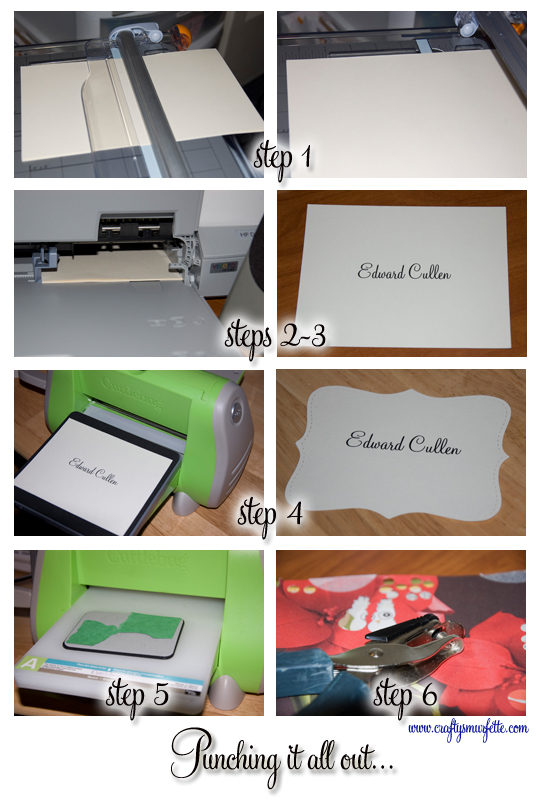
  1. Cut your paper.  I cut my paper ahead of time so it is easier to center it on the die cut.  Since I am using regular 8.5 x 11 paper, I simply cut my paper into fourths.  For this project I used my paper-cutter because it has the outlines for this size paper on the board so I just line it up and cut.  Each piece of paper should end up 4.25 x 5.5 inches.
  2. Setup your document in your word processing software.  I use MS Word, so I just create a new document and then set the page size to be the 4.25 x 5.5 inches of my pre-cut paper.  Then I center the document and choose my font/size of choice.  For this project I used Monterey BT which you can download for free (see my templates page for a link). This is where you could get really fancy and use the mail merge feature of MS Word to fill in from a spreadsheet, it’s a great timesaver but is a bit tricky to setup…or you could just cut and paste in each one like I did.
  3. Print out your individual name plates.
  4. Start die cutting.  Using the Top Note Die face up in your machine, carefully center the printed page in the center of the surface.  Run through the machine.  Repeat for each printed page.
  5. Continue die cutting.  Now take out your green paper and the holly die and start working on cutting out your leaves.  A large holly shaped paper punch would also work well for this if you have one!  You’ll need 2 holly leaves per name plate.  Note that I didn’t use whole pieces of paper when I cut out my leaves…I had some scrap paper from the edges of some green top notes I cut out earlier so I just used the scrap paper to line up over my leaves.  This is a great usage for scraps or even perhaps those envelopes from the Christmas cards you’ve already received!
  6. Punch out your berries.  Now the Holly Die comes with a berry if you’d like a single red berry…but I liked the smaller berries so I went with a standard hole punch.  You’ll need 3 to 4 berries per name plate.  Again this is a great place to reuse paper…you can see I used the cover of an old PaperSource catalog that was in my recycle bin.

Putting it all together:

  1. Start with the Leaves.  Using a piece of plastic or paper, take the glue stick and cover the back of 2 of the holly leaves so the portions of the leaves that will attach to the name plate are covered.  Carefully lift them from the backing and place onto name plate (I found it easier to start with the lower leaf in the bottom left corner and then add the upper one afterwards).  To remove the leaf from the backing I was able to use my fingernail, however tweezers would also work well for this.
  2. Add the berries.  Using a glue stick repeat the step above for the berries, this is the most tedious step.  I think a glue pen or even school glue might have worked more quickly for this step.
  3. Admire your work and set that table!

If you like these, you might also like the other entries in my Die-Cut Christmas Series:
- Die-Cut Christmas Card Addresses
- Die-Cut Seating Cards
- Die-Cut Food Buffet Labels

Die-Cut Christmas – Addressing the Cards

I’ve dubbed this Christmas season in our home as the “Die-Cut Christmas” because I plan to make several projects using both my Cuttlebug for die-cuts and paper punches.  And….it all started with this project:  Christmas Card Addresses!

Editor’s Note:  Here is where I should be totally honest and fess up that it  really all started because my spreadsheet was wrong and I addressed quite a few cards with the wrong zip code.  We didn’t have any extra red envelopes and after writing personalized messages in our cards I needed to find a “cover up”!  Then I liked the cover up better and set out to snazz-up the remainder!

Materials Needed:

  • White or Ivory Text Weight Paper
  • Green Cardstock or Construction paper (it’s ok to reuse envelopes, etc.)
  • Red Paper (it’s ok to reuse envelopes, etc.)
  • Glue Stick (or you could use a Xyron)

Tools  Needed:

  • Top Note Die from Stampin Up
  • Die Cutting Machine (I use a Cuttlebug)
  • Sizzix Festive Christmas Set (purchased 50% off at Joann’s)
  • Standard Hole Punch
  • Scissors or Paper Cutter
  • Computer with Word Processing Software of your choice
  • Home Printer

Getting the pieces punched out:

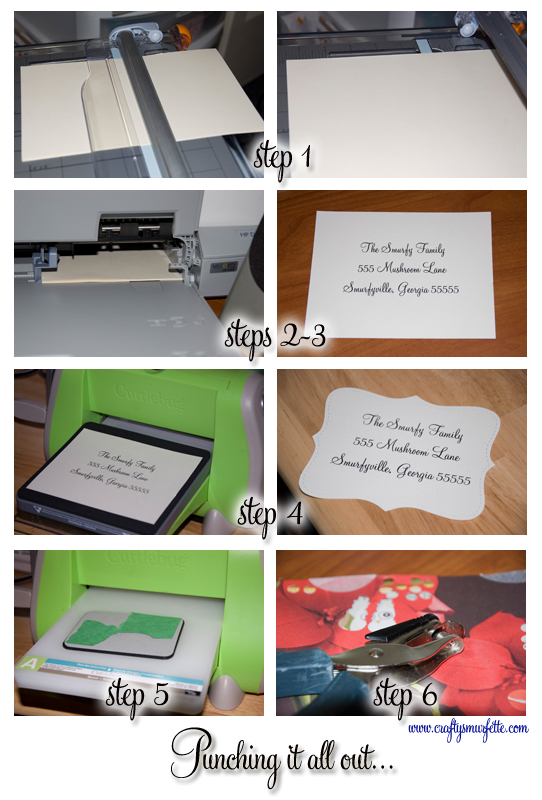
  1. Cut your paper.  I cut my paper ahead of time so it is easier to center it on the die cut.  Since I am using regular 8.5 x 11 paper, I simply cut my paper into fourths.  For this project I used my paper-cutter because it has the outlines for this size paper on the board so I just line it up and cut.  Each piece of paper should end up 4.25 x 5.5 inches.
  2. Setup your document in your word processing software.  I use MS Word, so I just create a new document and then set the page size to be the 4.25 x 5.5 inches of my pre-cut paper.  Then I center the document and choose my font/size of choice.  For this project I used Monterey BT which I was able to download for free. This is where you could get really fancy and use the mail merge feature of MS Word to fill in from a spreadsheet, it’s a great time-saver but is a bit tricky to setup…or you could just cut and paste in each one like I did.
  3. Print out your address pages.
  4. Start die cutting.  Using the Top Note Die face up in your machine, carefully center the printed page in the center of the surface.  Run through the machine.  Repeat for each printed page.  I won’t lie…this can get old if you have a lot of addresses to cut out.  I did mine in 2 batches while watching Christmas movies so it made it go much faster!
  5. Continue die cutting.  Now take out your green paper and the holly die and start working on cutting out your leaves.  A large holly shaped paper punch would also work well for this if you have one!  You’ll need 2 holly leaves per envelope.  Note that I didn’t use whole pieces of paper when I cut out my leaves…I had some scrap paper from the edges of some green top notes I cut out earlier so I just used the scrap paper to line up over my leaves.  This is a great usage for scraps or even perhaps those envelopes from the Christmas cards you’ve already received!
  6. Punch out your berries.  Now the Holly Die comes with a berry if you’d like a single red berry…but I liked the smaller berries so I went with a standard hole punch.  You’ll need 3 to 4 berries per envelope.  Again this is a great place to reuse paper…you can see I used the cover of an old Paper-Source catalog that was in my recycle bin.

Putting it all together:

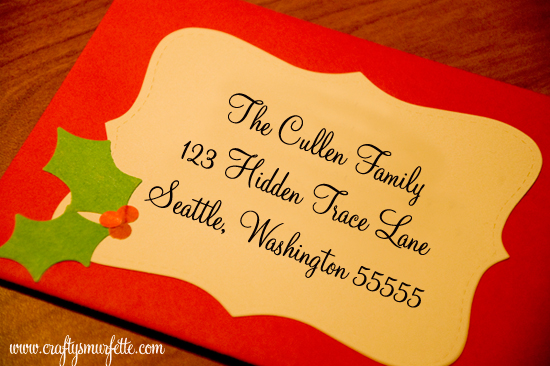
  1. Start with the addresses.  Flip each of the addresses face side down and apply your glue stick to the back, making sure to cover all the edges and the center of the shape.  This is also where you could use your Xyron to speed up the process but wouldn’t you just know it mine needs a refill, so I stuck with the readily available glue stick.
  2. Quickly and carefully apply the address to the center of your envelope and press around all the edges and center to ensure it is firmly in place!
  3. Add the Leaves.  Using a piece of plastic or paper, take the glue stick and cover the back of 2 of the holly leaves so that all edges are covered.  Carefully lift them from the backing and place onto envelope (I found it easier to start with the lower leaf in the bottom left corner and then add the upper one afterward).  To remove the leaf from the backing I was able to use my fingernail, however tweezers would also work well for this.
  4. Add the berries.  Using a glue stick repeat the step above for the berries, this is the most tedious step.  I think a glue pen or even school glue might have worked more quickly for this step.
  5. Admire your work and send!

If you like these, you might also like the other entries in my Die-Cut Christmas Series:
- Die-Cut Christmas Card Addresses
- Die-Cut Seating Cards
- Die-Cut Food Buffet Labels

Semi-DIY: Embellished Apron Tutorial

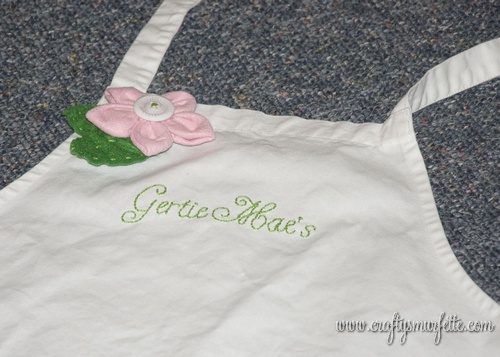
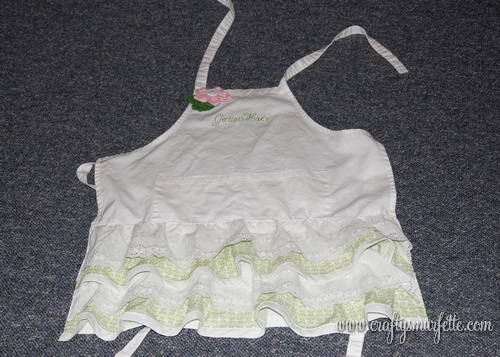
So, a while back I revealed the first of my vendor thank you gifts…the frilley functional apron for our florist/DOC.  Today, I’ll walk you through a quick tutorial on the top portion to help get you started making your own.  The trick to making this a quick project was to once again go the semi-DIY route.

Supplies Needed:

  • PreMade apron, I used a plain white one from the re-do line at Target.
  • 1 Package of 1/2 in quilt binding
  • 1.5 yards of 4 inch eyelet
  • .5 yard of fabric for ruffles (mine was 44 inches wide)
  • matching machine thread to make and attach ruffles
  • embroidery thread for monogram
  • Felt for flowers or flower leaves (1 piece per 2 flower and 6 leaves)
  • 1 snap set for each flower to attach (only if you want to be able to switch them out)

Tools Needed:

  • Sewing Machine
  • Embroidery Needle
  • Hand Sewing Needle
  • Heat transfer pencil
  • iron & ironing board
  • straight pins
  • rotary cutting blade & cutting mat

Instructions:

Before I started doing anything to the apron my first step was to wash & dry it.  This took out the sizing and made it a bit softer and easier to work with.  It also made it all wrinkly, which made it a bit more shabby chic since that was the look I was going for.  Then I started work on the monogram on the bib of the apron, since I knew this hand sewing piece would take the longest. 

Hand Embroidery Setup & Directions:
csmurf_texttofabric

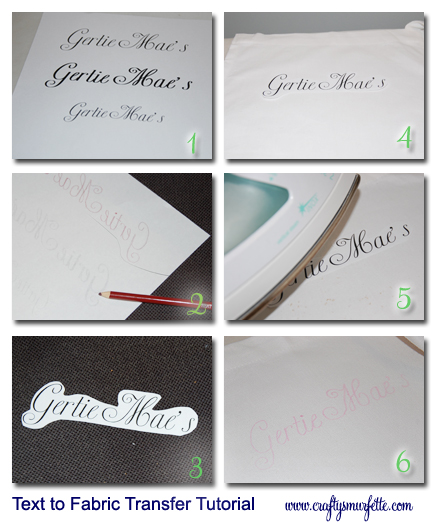
  1. Setup your text in the word processor of your choosing and print them out on standard printer paper.
  2. Flip the paper over and using your iron-on transfer pencil trace over the text.  To make this process easier I used a light box, if you don’t have one visit Weddingbee’s Mrs. Stiletto to learn how to make your own. (hint before I owned a real light box I have been known to place a clip lamp under an old glass-topped coffee table).
  3. Cut out around your text for easier placement on your apron (or other fabric item).
  4. Carefully pre-iron your apron top and leaving the apron on the ironing board, place your template, printer side up on your fabric.
  5. Iron over the paper, careful not to move or wrinkle it. I use a high heat seating with no steam.
  6. Let cool for a few minutes, and then carefully remove the paper revealing your text template on your apron.  Now you are ready to start sewing!
  7. Using embroidery thread stitch over your letters to complete your monogram or phrase.  I used a simple outline stitch but a chain stitch would also work well (use the links to view tutorial videos).  I did this while watching NFL football games with the hubs.

Making  Ruffles:
Since the eyelet was purchased pre-ruffled that meant I would only need two more rows of complimenting ruffles.  For this project I used leftover fabric from our wedding cake table, but provided your fabric is wide enough you can easily get 3 ruffles per each 1/2 yard.

  1. First measure the width of your apron bottom and multiply by 1.5 (or 2 if you want really ruffly ruffles) and cut the fabric section into that width.
  2. To make cutting easier I first ironed my fabric, folded it in half lengthwise and pressed it again.
  3. Using the rotary cutter and cutting mat I cut 2 strips of fabric that was 4 inches in height.
  4. Take out your quilt binding and cut it into strips the same width as your fabric.  Cut one piece of binding per each fabric strip and sew to bottom edge of what will become ruffle.
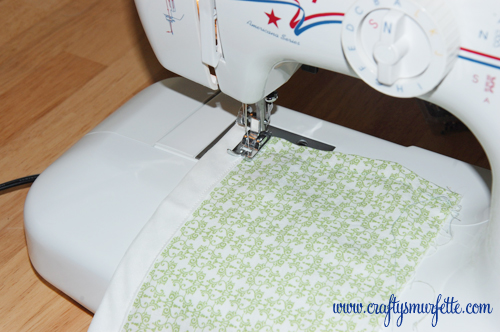
  5. Using either your sewing machine to run a long loose stitch down the top of the ruffle, or do like I did and hand sew a long straight row of loose stitches to the top of the ruffle.  Make sure to leave threads on both ends so you can pull to form the ruffle.
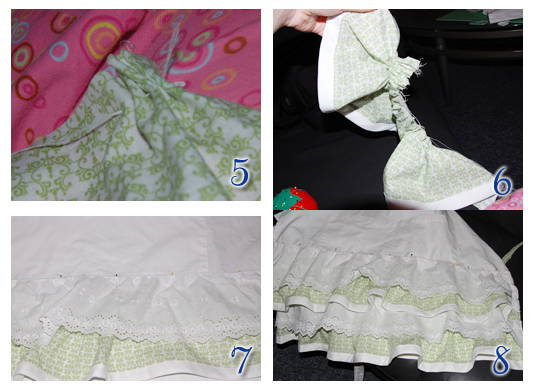
  6. Pull threads to make fabric ruffle, and spread out to be the width of your apron
  7. Pin in place
  8. Using sewing machine, sew ruffle into place
  9. repeat with remaining eyelet and ruffles
DIY – Shoe & Boot Bags for a Buck

A few weeks ago I opened a small etsy shop in an effort to help sell some of  my MIL’s clothing from the late 70′s & 80′s for her husband.  I started with 3 items that were easily posted just to see how well they’d do…and last week I sold my first item (cowboy boots).  It was really exciting (for both my step-FIL and I).   As I prepared to ship the boots to their new owner I realized that they needed to be wrapped to prevent the soles from scuffing the white leather, which made me realize that wasn’t necessarily just a shipping issue.  I started looking around the craft room for something stronger than tissue paper that would survive shipping and saw a couple of Flour Sack dish clothes from the local dollar store that I’d picked up to cut into templates for a quilting project currently running around in my head.  They were perfect, and with scissors and a sewing machine I had two dust bags in less than 10 minutes.   10 minutes + $1 = Winner!

Materials Needed:
- Flour Sack Dish Cloth from Dollar Store (1 per 2 or 3 bags depending on size)

Tools Needed:
- Sewing Machine with matching thread
- Scissors

Instructions:

  1. Measure shoes or boots to determine how large your bag(s) need to be.
  2. Remove tags and open dish cloth flat.
  3. Fold dish cloth in half horizontally with unfinished edges to the outside.
  4. Using measurements determine how many bags can be made from one cloth.  For this example of women’s cowboy boots we can make two bags.
  5. Using scissors or a rotary blade cut the cloth into desired widths.
  6. Align open sides of the cloth (pin in place if needed) and sew along the edges.  Repeat on other open side.
  7. Turn bag right-side out
  8. Insert boots and store for use (or shipping)

bootbags_003

For a more finished product you could also turn down the top edge including a draw string.  I plan to make several more of these for several handbags and seasonal shoes so they won’t get dusty between uses.  I also think I will attach leftover tags to identify what is in each bag.

Price Breakdown for 2 boot bags:
$1.06
(tax included)  – You just can’t beat that :)

Semi-DIY: Halloween Lanterns

While Halloween typically isn’t a big holiday in the Smurfy household, this year will be a little bit different.  We’ve been recruited by a family member to help out at their historic district home since they have over 200 kids visit, and to bring any decorations we might have.  Since we didn’t have decorations other than some orange string lights (from football season), I decided to try to whip a few up.  I think these little guys turned out quite well, and really like that I can use them again!

Supplies Needed:

  • paper lanterns
  • battery operated tea lights (1 or 2 per lantern)
  • black construction paper
  • glue stick
  • double sided tape or white glue

Tools Needed:

Pumpkin Lanterns:

  1. Print out your jack-o-lantern template, careful to trim around as much as possible.
  2. Fold construction paper in half so you can cut two faces at once.
  3. Use a washable glue stick in a few places on the back of the template to help hold it in place while you cut.
  4. Carefully cut out your  face with a craft knife and carefully separate the pieces from the template. (Hint: Save the cut-out templates and left over black paper and use this for carving your real jack-o-lanterns!)
  5. Using double sided tape or white school glue attach your face to the assembled lantern.
  6. Add battery operated tea lights.  I usually drop the tea lights in a sandwich bag and just drop them into the lantern.  The sandwich bag keeps it from falling out the bottom.  If you want them brighter you can always use 2 tea lights per lantern.
  7. Hang and enjoy!!

Ghost Lanterns:

  1. Print out your ghost template, careful to trim around as much as possible.
  2. Fold construction paper in half so you can cut two faces at once.  In this case since I wanted to cut out three, I added an additional piece in the middle of the stack.
  3. Use a washable glue stick in a few places on the back of the template to help hold it in place while you cut.
  4. Carefully cut out your jack-o-lantern face with a craft knife and carefully separate the pieces from the template.
  5. Using double sided tape or white school glue attach your face to the assembled lantern.
  6. Add battery operated tea lights.  I usually drop the tea lights in a sandwich bag and just drop them into the lantern.  The sandwich bag keeps it from falling out the bottom.  If you want them brighter you can always use 2 tea lights per lantern.
  7. Hang and enjoy!!

Reuse Information:
The great thing about using double-sided tape is that I am able to simply pop the cutouts off the lantern when we take them down (carefully as to not rip the paper lantern itself).  This means I can take the lanterns apart and store them to use again next year or use the plain orange & white lanterns for another party.

Cost Breakdown:
We already had most of the tools necessary for this quick Halloween decoration, so I just needed to pick up a couple of supplies.  I only made two stops, Michael’s where I had a 20% entire purchase coupon and the local dollar store, Dollar Tree.  If you don’t already have construction paper and glue you can easily pick those up at the Dollar Tree as well.  I refer to my local dollar store as my “small craft store”.

- White Lanterns: $1.00 each with 40% total purchase coupon at Michael’s
- Orange Lanterns:  $1.50 each minus 40%  fall decor sale at Michael’s
- Battery Operated Tea Lights:  $1.00 for package of 2 at Dollar Tree
————————————————————————————————–
Total for 6 Lanterns (including tax):  $8.02 or $1.33 each

DIY – Framed Fabric Table Numbers

To start with I wasn’t sure we would even need table numbers.  We hadn’t’ planned on a seated dinner, but then realized it would be easier on both our event staff and our guests if we tackled assigned seating.  Of course that meant more DIY projects since that single decision yielded the need for escort cards, table numbers, and perhaps seating cards.  I didn’t like the idea of a piece of paper on a metal stick.   While I think they are perfectly fine, I just didn’t think they’d fit our “not-so-shabby chic meets French Garden” wedding.  So I went to my standard go-to for wedding inspiration and found some framed table numbers on Weddingbee to use for inspiration and then gave it a little different approach for a look that really fit with our table decor.  I think they turned out quite well :)

table01(photo credit:  Climie + CO)

Tools Needed:

  • Hot Glue Gun & Glue
  • Scissors
  • Paint Brush
  • Tape
  • Paint in desired color

Supplies Needed:

  • 4×6 ” Frames (make sure they have glass panes)
  • Fabric (1/2 yard or so per 5 frames)
  • Wooden Number(s) for each table.

Getting Everything Ready to Assemble:

  1. Disassemble your frames.  Doing this all at once will mean you can put them back together in a more assembly line type process which will go MUCH faster.
  2. Paint your frames if they need to be a different color.  I realize that it might be easier & cheaper to buy unfinished frames and paint them.  Had I not found white frames I liked I would have done the same thing.  This is the step where you should paint the front and sides of your frames.  Let them dry and then flip them over to paint the back.  I also think spray paint might work well for this, especially if you could hang the frames on a makeshift clothes line so they could hang and dry more quickly.
  3. Paint the wooden numbers.  Since they are unfinished it may mean you need multiple coats of paint to produce a solid coated surface.  Since I wanted a more textured look to my numbers I used a foam stencil brush and “dabbed” them up and down with paint.  It gave it a more textured finish than painting them with a regular brush in a back and forth motion.
  4. Let everything dry.  I painted my numbers one night and then left them to dry until the following evening before I started assembly.

Assembling the Table Numbers:

  1. Take one of the pieces of glass and lay it on top of your fabric to use as a template.  Use your scissors and cut around the piece of glass, leaving about an inch of fabric on all sides.  Repeat this step for the number of tables you will have.  We used two different prints and had 10 tables, so we cut 5 blue pieces and 5 green ones.
  2. This is where the assembly line process kicks in (so if you have buddies over to help you can assign each one a task).  Go ahead and plug in your glue gun and get that bad boy preheated.  And no laughing at how old my glue gun looks…because it is!  My mom gave me her OLD one when I left for college 10 years ago, and it still works so I still have it!  Thanks Mom! :)
  3. Take a piece of your fabric and place it face down on a flat surface.
  4. Place a piece of glass centered on top of the fabric.
  5. Pull up one of the long sides of the fabric wrapping it around the edge of the glass and using scotch tape secure it to the glass.  Shocked that I used tape for attaching the fabric instead of glue?  By using tape we were able to easily remove the fabric and reuse the frames after the wedding!
  6. Repeat this process on the other long side, making sure to pull the fabric tightly against the glass to make a smooth surface.
  7. Now, take the fabric on the end of the glass and push it in from the sides to make two triangular flaps.  Pull the back flaps back firmly against the glass and tape down.
  8. Then pull the top flap down over the bottom one and also tape it securely to the glass.  Repeat this process on the other side of the glass plate and then turn it over to make sure you have it all tight and smooth. This is where you could pass it off to someone else if you’d like.
  9. Now it’s time to reassemble your frames.  Place the covered glass pane back into the frame with the covered side exposed.  Then place the frame backing into the frame and reattach with side slides or press down the staples (depending on how your frames are structured).  Then pass the reassembled frame off to be glued.
  10. First play around and decide where you want your numbers to lie on the frame.  I wanted everything centered which made it really easy to stick them and move on.
  11. Break out your trusty glue gun and apply a thin line of glue to the back of your painted numbers and then quickly position them in the center of the fabric area.
  12. Hold it down until solid, and you are DONE.  Pack them up and mark table numbers off your list.

For ReUse After the Wedding:
Using this method made it possible for use to reuse the frames after our event, AND even sell the fabric/number portion to another bride and save her some work! I call that a win-win!  To reuse simply take the back off the frames and remove the glass plate with the fabric/number still attached.  Simply peel off the scotch tape and separate the fabric from the glass.  As long as you used a light weight Cotton fabric the glue won’t have gone through the fabric and it will slide right off.  You might need to clean the glass panes, but otherwise your frames are ready to showcase your beautiful wedding photos!  This is how my mom reused them for our hometown reception.

3773399031_c879735e1c

This is what we were left with once we took the fabric off the glass….see they are all intact and ready for someone else to use with the frames of their choice or even save for a future event!

Cost Breakdown & Ideas for more savings:
Frames: We used white wooden frames that my mom already had to use for our hometown reception to display wedding photos (and later gift to several family members).  However, for this mock-up I used white plastic ones  I picked up for $1 each at Dollar Tree and I actually think with the beaded edge they look nicer , plus they are lighter weight for those needing to pack & transport.

Fabric: $1.00 from the Dollar-a -Yard section at Hancock Fabrics we had leftover from covering our jam jar escort cards/favors.  We purchased a yard of each fabric and used approx. 1/2 a yard of each color for (5) 4×6 inch frames of each color.  You could also use leftover scrapbook paper like this or wrapping paper like this.

Wooden Numbers: $6.24 (including tax) for 11.  From Michaels (purchased during a 40% sale).  Using coupons at craft stores like Michaels, JoAnn’s, or Hobby Lobby can really save you alot of money!  Sign up for each of their email programs to get advance notice of big sales and extra coupons sent directly to your inbox.

Paint & Brush: Free since I already had them from some other project years ago.  These are also items you could pick up for a buck at Dollar Tree.

Total for 10 Tables: $18.96 (w/Dollar Tree Frames)
Price per Table: $1.89 (w/Dollar Tree Frames)